ServicesBamboo Removal
Bamboo Removal in Leesburg
Cutting bamboo to the ground only resets the clock. We remove the canes, excavate the rhizomes that feed them and leave the area raked, graded and clean, with your lawn, beds and fence protected while the work goes on.
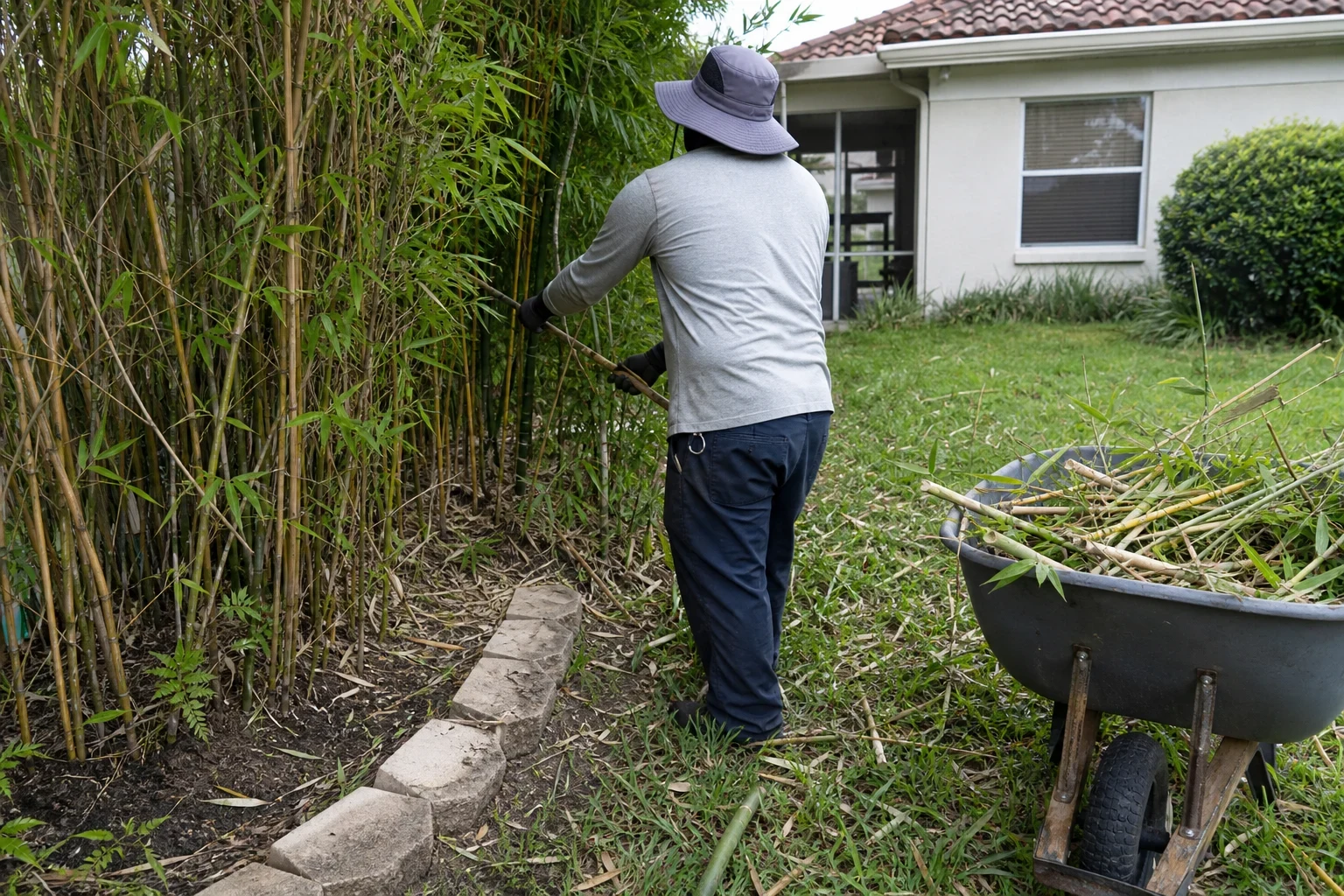
Removal That Goes Below the Surface
Most bamboo planted in yards around Leesburg is a running type, often golden bamboo. It spreads through rhizomes, thick underground stems that travel sideways through the top foot or so of soil and send up new shoots wherever they surface. That is why a stand planted as a privacy screen ends up under the fence, in the lawn or against the side of your home.
Our approach is to treat the root system as the real job. The canes come down and leave the property, then we dig out the rhizome mat and sift through the loosened soil for the pieces that would otherwise regrow. Clumping bamboo stays tighter but forms a dense crown that still takes digging to remove.
Our company is business licensed and fully insured, and we have been in business since 2018. Bamboo work involves heavy digging close to fences, slabs and irrigation lines, so we set up carefully before the first cut and clean up before we leave each day.
What the Work Includes
- Cutting and hauling the canes
- Mature culms are cut low, bundled and carried out to our truck rather than dragged across your lawn. Leaves and splinters are raked up as we go.
- Rhizome excavation
- We dig out the rhizome mat by hand or with compact equipment, depending on access. Sandy Central Florida soil lets us follow runners a fair distance, and we chase them until they stop.
- Soil sifting and backfill
- Small rhizome fragments can sprout on their own, so we work through the loosened soil and pull them out. Holes are backfilled and the ground is graded level.
- Protecting what stays
- Walkways and lawn near the work area get covered, and we flag sprinkler heads and lines before digging. If your bamboo is close to the foundation, we dig by hand along that edge.
- Root barrier, if you want one
- When you are keeping some bamboo or a neighbor's stand runs to your property line, we can install a vertical root barrier along the edge to slow future spread.
- A clear plan for the bare ground
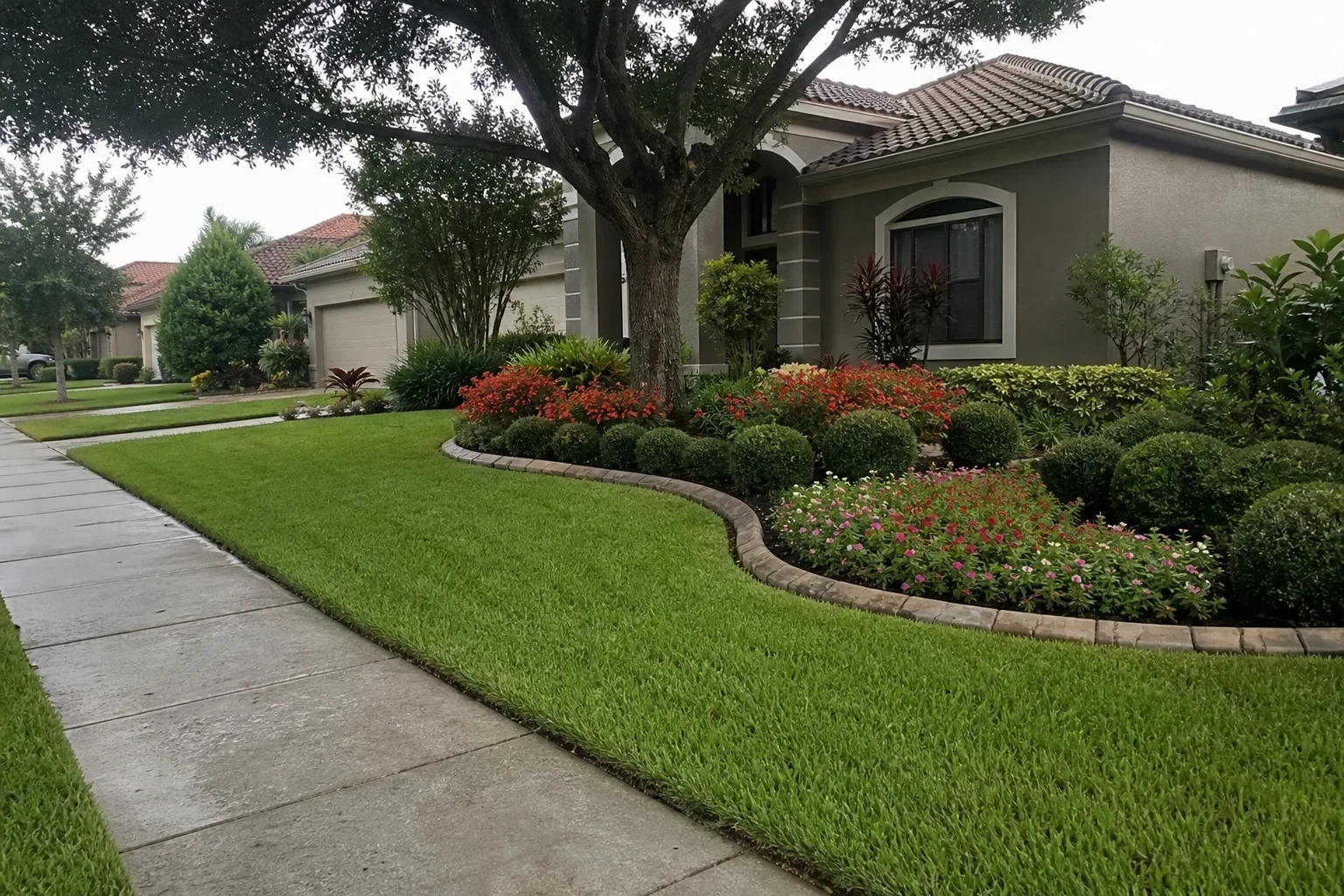
- Once the area is cleared, we can follow with sod installation, mulch and beds, or new plantings from our landscape design work, so you are not left with an open patch of sand.
Signs Your Bamboo Has Outgrown Its Spot
Shoots in the lawn
New spears coming up several feet from the main stand mean rhizomes are running under your grass. They will keep thickening if left alone.
Pressure on fences and pavers
Bamboo pushing through fence lines, lifting pavers or crowding a driveway edge is a sign the roots have moved past where anyone intended.
Growth near the house
Canes leaning on the roofline or shoots close to the slab trap moisture and invite pests. It is easier to remove before it gets established there.
Cutting it back has not worked
If you have mowed or cut the stand down and it came back thicker, the rhizome network is still intact underneath.
A dense, dying center
Older stands often fill with dead canes and leaf litter in the middle. That debris holds water and can shelter rodents and snakes close to your home.
How a Bamboo Job Runs
- 1
Walkthrough and written estimate
We visit, look at the size of the stand, how far it has traveled and what sits near it. You get a written estimate that explains the digging, hauling and restoration separately.
- 2
Setup and protection
On the first morning we mark irrigation, cover nearby hardscape and plan a clean path for debris to reach the truck.
- 3
Cut, dig and sift
Canes come down first, then the rhizomes are excavated and the soil is worked through. Larger stands can take more than one day, and we rake, haul and tidy the area before leaving each evening.
- 4
Grade and finish
The ground is backfilled and leveled, and any barrier or replanting you chose goes in.
- 5
Check for regrowth
Bamboo is most active in the warm, wet months. We explain what a stray shoot looks like and how to handle it, so a missed fragment does not turn into a new stand.
What Shapes the Cost
Bamboo removal is priced by the effort below ground more than the height of the canes. We look at the stand in person and write out each part of the job so you can see where the cost comes from. If the project is a big one, you can spread the payments out: we offer financing of up to $100,000, with terms anywhere from two to twelve years and no penalty for paying it off early.
- Size and age of the stand
- A small clump planted a few years ago is a different job from a mature screen running the length of a property line. Older stands have thicker, deeper rhizome mats.
- How far the runners have spread
- Rhizomes under lawn, beds or hardscape add digging time, and work under pavers means lifting and resetting them.
- Access and nearby features
- Gate width decides whether compact equipment fits. Fences, slabs and irrigation close to the stand mean more careful hand digging.
- Haul-away volume
- Bamboo is bulky, and a large stand fills several loads of canes and root mass.
- Barrier and restoration
- Adding a root barrier, fresh sod or new beds after removal is priced as its own line so you can choose what fits.
Bamboo Removal Questions
Something not covered here? (407) 594-7966
Will the bamboo come back after you remove it?
Bamboo regrows from rhizome pieces left in the soil, which is why we dig and sift rather than just cut. With a thorough excavation, regrowth is usually limited to an occasional stray shoot. Pulling those as soon as they appear keeps the area clear.
Do you just spray it with herbicide?
No. Spraying alone rarely kills an established running stand, and it leaves dead rhizomes in the ground. Physical removal of the canes and root mat is the method we rely on.
The bamboo is coming from my neighbor's yard. What can you do?
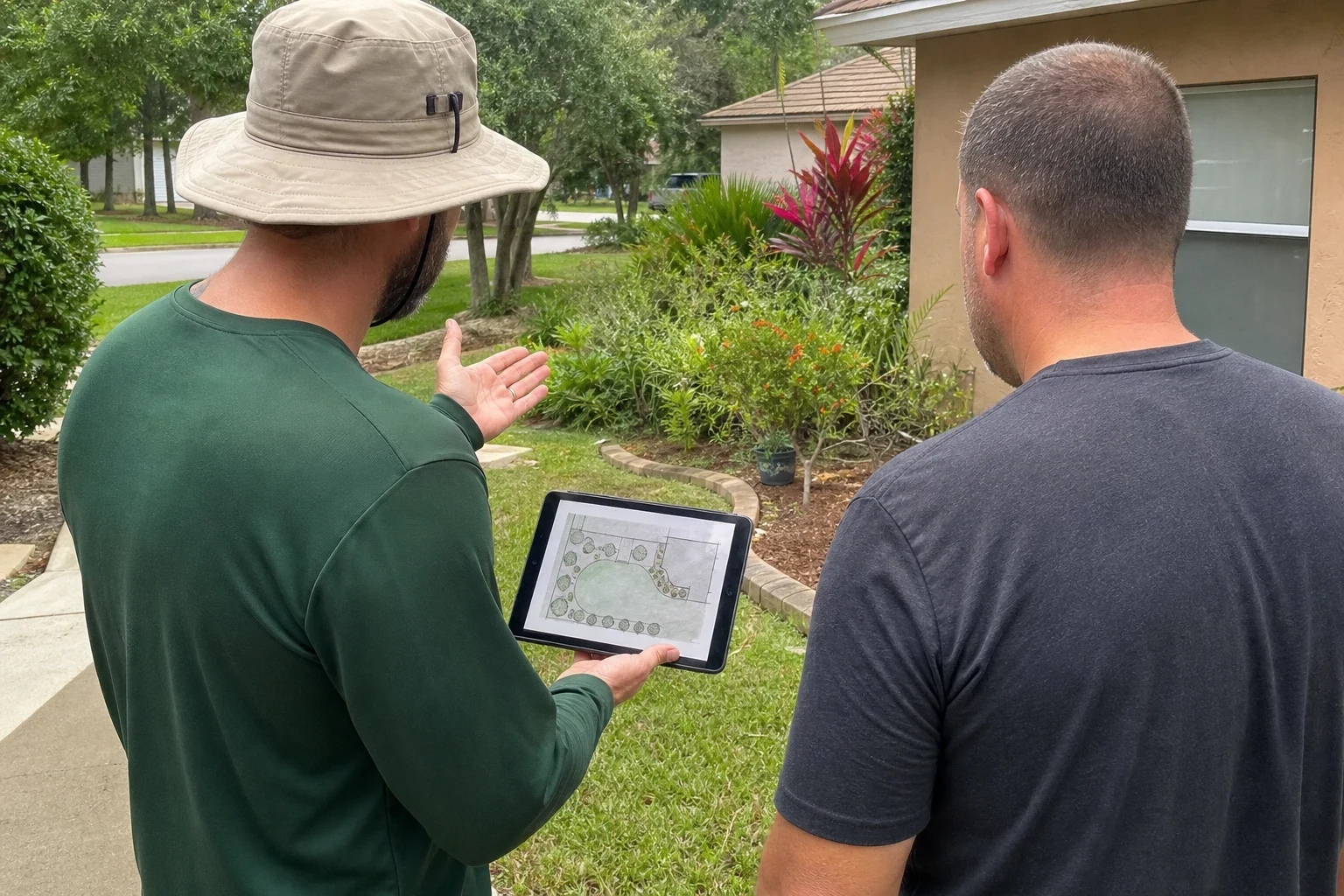
We can remove everything on your side of the line and install a root barrier along the property edge to slow new runners. We will talk through the layout with you during the walkthrough.
How much of a mess will it make?
Digging bamboo moves a lot of soil, but we cover nearby surfaces, keep debris on a set path and rake up at the end of every day. When we finish, the area is graded and the canes, roots and leaves are gone.
What should go in the space afterward?
That depends on how you use the yard. Sod works well for open areas, and a planted bed or new hedge makes a good replacement screen. We can handle either once the bamboo is out.
Ready to Reclaim That Corner of the Yard
We will walk the stand with you, trace where the runners have gone and explain what removal involves. The estimate is free and written out line by line.