ServicesHardscape Installation
Hardscape Installation in Leesburg
We build paver patios, walkways, retaining walls and borders that stay level and drain the way they should. The base gets as much care as the surface you see, and your driveway, lawn and siding are protected and cleaned up at the end of every work day.
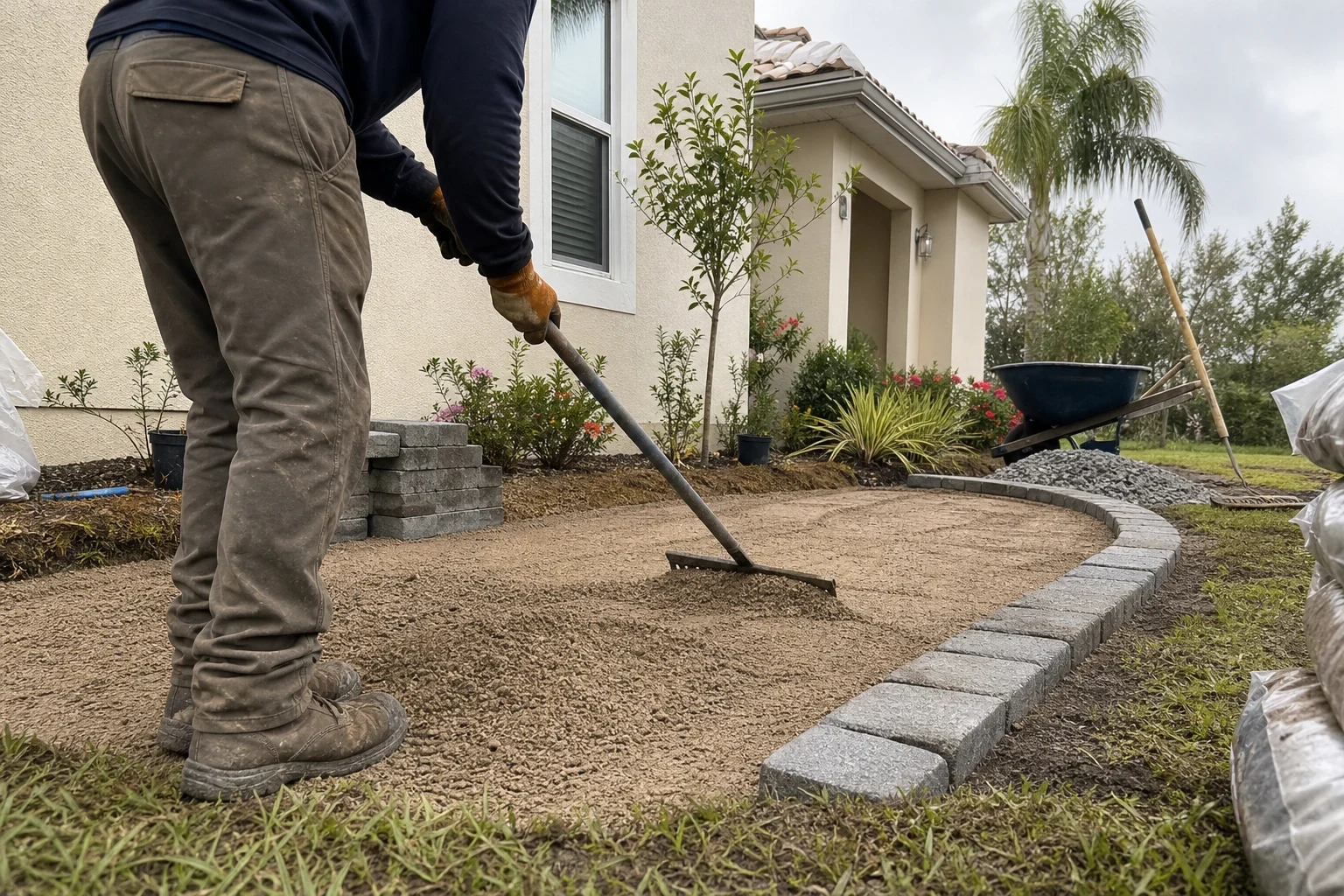
Stone and Pavers That Hold Their Shape
A patio or walkway is only as good as what sits beneath it. Most sinking, rocking pavers and weeds pushing through joints trace back to a thin or poorly compacted base. We excavate to the right depth, lay and compact crushed stone in lifts, screed a bedding layer, and lock the edges so the surface keeps its line for years.
Hardscape is the right call when you want usable outdoor space that does not need mowing or watering: a patio off the back door, a path to the side gate, a low wall that holds a slope, or a clean border between lawn and beds. Central Florida's sandy soil and heavy summer downpours make drainage and edge restraint part of every design.
Landscaping Leesburg is business licensed and fully insured, and we have been building outdoor spaces for homeowners here since 2018. Because heavy material and equipment come onto your property, we plan how they arrive and leave before the first paver is unloaded.
What Our Hardscape Work Covers
- Paver patios
- Concrete pavers, travertine or natural stone laid in the pattern you choose. Joints are finished with polymeric sand, which firms up after wetting and resists weeds and washout.
- Walkways and garden paths
- Front entries, side-yard paths and stepping routes through beds. We set a gentle cross slope so rain runs off rather than pooling at the door.
- Retaining and seat walls
- Segmental block walls with gravel backfill and drainage behind them, so water pressure does not push the wall out of line.
- Edging and borders
- Concrete or stone borders that separate lawn from beds and keep mulch and rock where they belong.
- Fire pit and gathering areas
- Paver pads and block fire pit surrounds sized for the seating you plan to use. If the area needs plantings around it, we can tie the work into landscape design.
Signs Your Yard Is Ready for Hardscape
Worn paths in the grass
If foot traffic has carved a dirt track to the gate or shed, a walkway gives that route a clean, permanent surface.
Sinking or uneven pavers
Pavers that rock, tilt or trap puddles usually sit on a failed base. Resetting them on new, compacted stone fixes the cause instead of the symptom.
A slope that keeps washing out
Sand and mulch sliding onto the patio after every storm is a sign a low retaining wall would hold the grade.
Cracked concrete slabs
Old poured patios with wide cracks and heaved sections can be removed and replaced with pavers, which flex with the ground and can be lifted and reset if needed.
No place to sit outside
When the yard looks good but nobody uses it, a patio or seating area usually changes that.
What Shapes the Cost of Hardscape
Every project is priced from your walkthrough, not a chart. The surface material matters, but site conditions and preparation often move the number just as much. Your written estimate shows where the money goes. If you would rather spread the cost out, we offer financing for amounts up to $100,000, with terms anywhere from 2 to 12 years and no penalty for paying it off early.
Size and shape
Square footage sets the base cost. Curves, borders and inlays add cutting time and material waste.
Material choice
Standard concrete pavers, travertine and natural stone differ widely in price and in how they are cut and set.
Removal and base work
Tearing out an old slab or digging deeper on soft ground adds labor and haul-away. Walls also need drainage stone and fabric behind them.
Access to the work area
A narrow side yard or fenced backyard can mean moving material by hand or with smaller equipment, which takes longer.
How a Hardscape Project Runs
- 1
On-site walkthrough
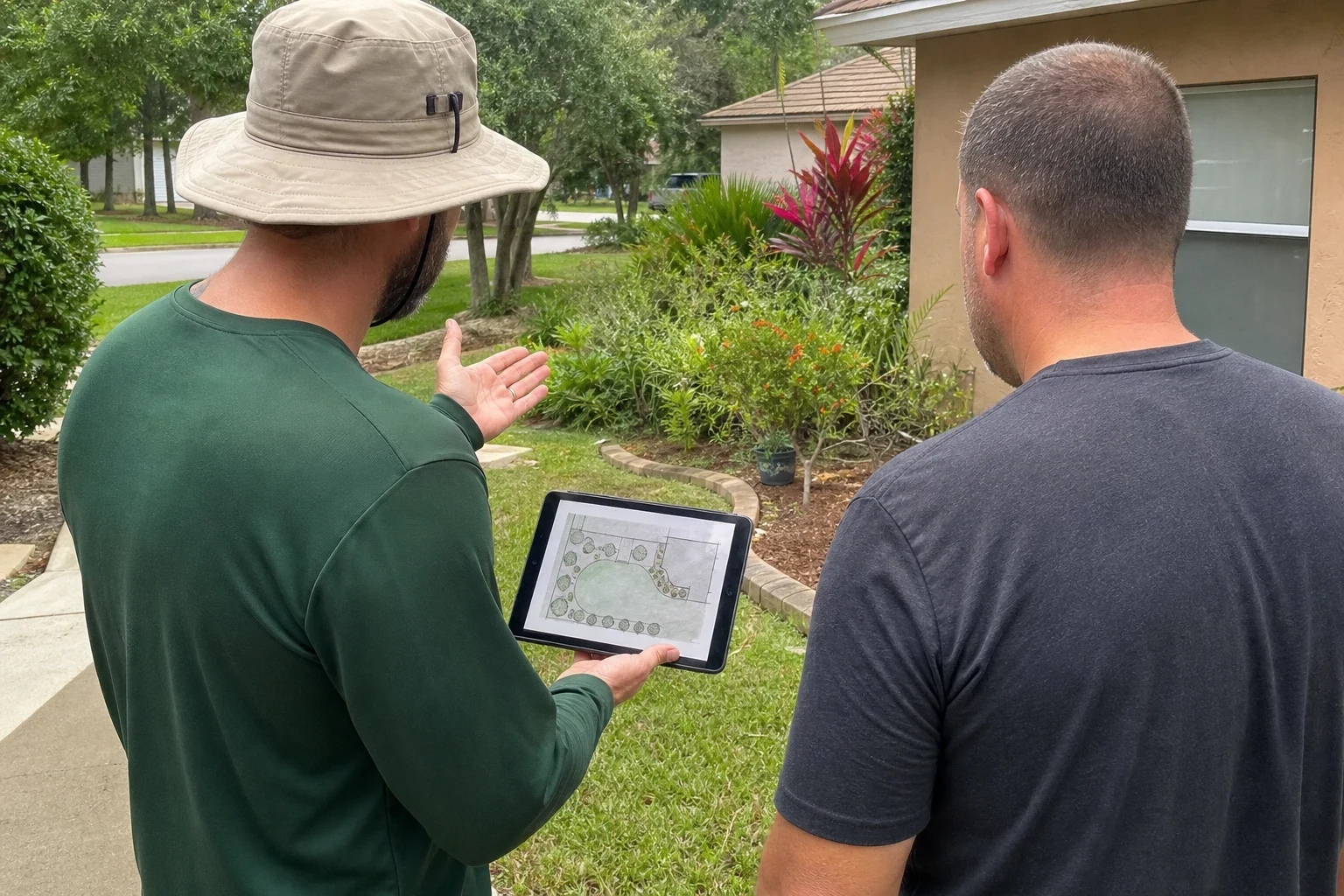
We walk the area with you, check the grade and where water flows, and talk through materials and layout. You get a written estimate that lists each part of the job.
- 2
Protecting the property
Before digging, we mark irrigation heads and lines, lay boards or mats over the lawn where equipment travels, and cover the driveway where pallets are set down.
- 3
Excavation and base
We remove soil to the planned depth, haul it off, and compact the crushed stone base in layers. This is the slowest part of the job and the part we do not rush.
- 4
Laying and finishing
Pavers or block are set, cut cleanly at the edges, restrained, compacted and swept with polymeric sand. Each day ends with the work area swept, offcuts and debris removed, and walkways left clear.
- 5
Final review
We walk the finished work with you, check for level and drainage, and leave the surrounding lawn and beds as tidy as we found them.
Hardscape Questions We Hear Often
How long does a paver patio take to install?
Most residential patios take a few working days once materials arrive. Larger areas, walls or slab removal add time. We give you a realistic schedule at the walkthrough and tell you if weather pushes anything back.
Will heavy equipment damage my lawn or driveway?
We plan the access route first and lay protection over grass and concrete where equipment and pallets go. Some turf along the path may need a short recovery, and if a patch needs repair we will talk with you about it, including our sod installation service.
Do pavers or poured concrete hold up better here?
Both can last when the base is right. Pavers handle ground movement better, and a single damaged piece can be lifted and replaced without cutting the whole surface. We will explain the tradeoffs for your yard.
Will my sprinklers still work afterward?
We mark and protect irrigation before digging and reroute heads or lines that sit under the new surface. If the system needs larger changes, our irrigation service can handle them during the same project.
Do you handle permits or HOA approval?
If your project needs a permit, we pull it. For HOA communities, we put together the layout and material details most review boards ask for and hand them to you, so your board can sign off before work starts. Mention your HOA when you call and we will plan for that step.
Start With a Walk Around Your Yard
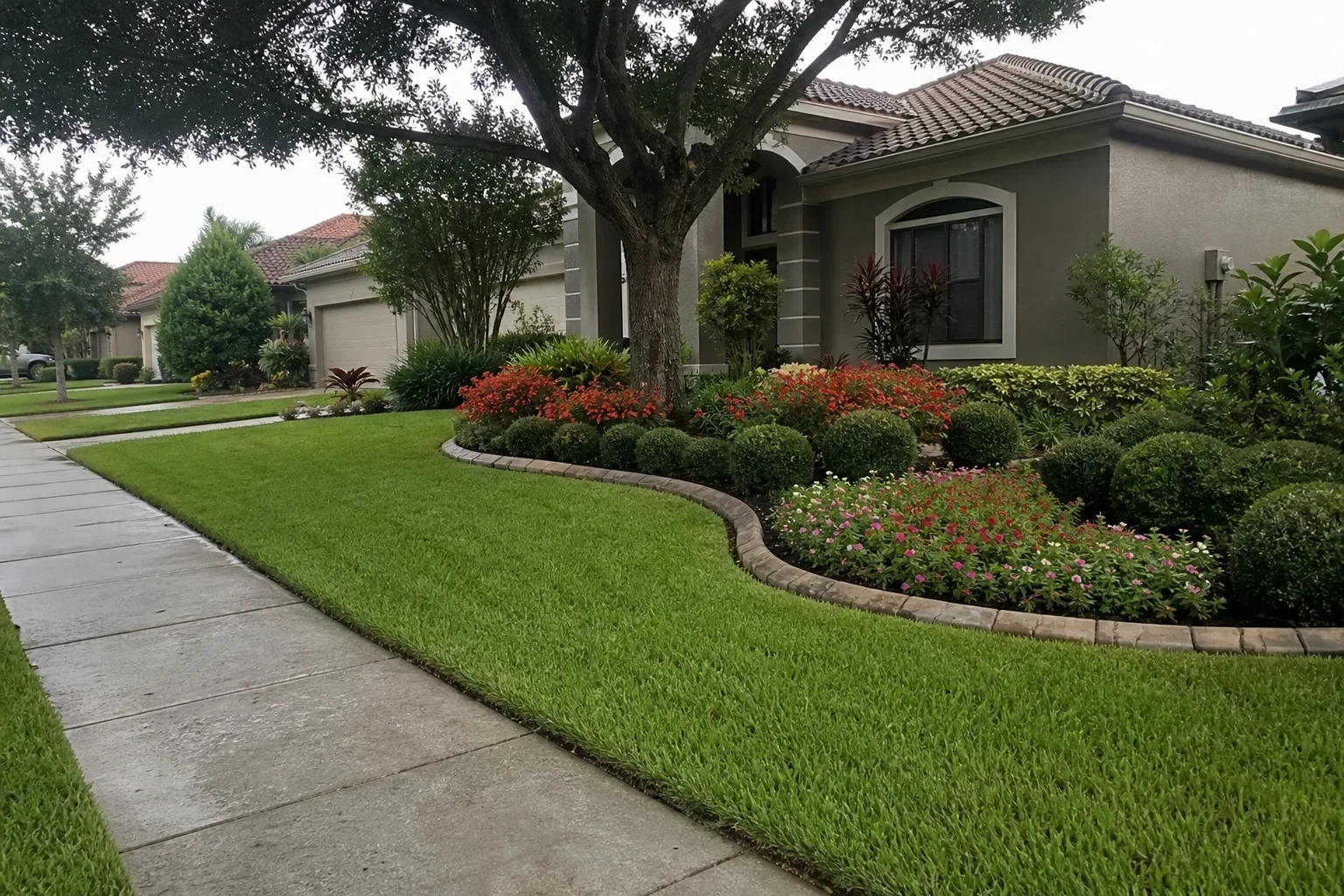
We will look at the space, the slope and the drainage, then give you a free written estimate. You will know what we plan to build and how we will keep your property clean while we do it.