ServicesIrrigation
Sprinkler and Drip Irrigation in Leesburg
We find the leaks, straighten the heads and add the zones your yard actually needs, so water reaches turf and beds instead of the driveway or the walls of your home. When we finish, trenches are filled, sod is back down and the paving is swept clean.
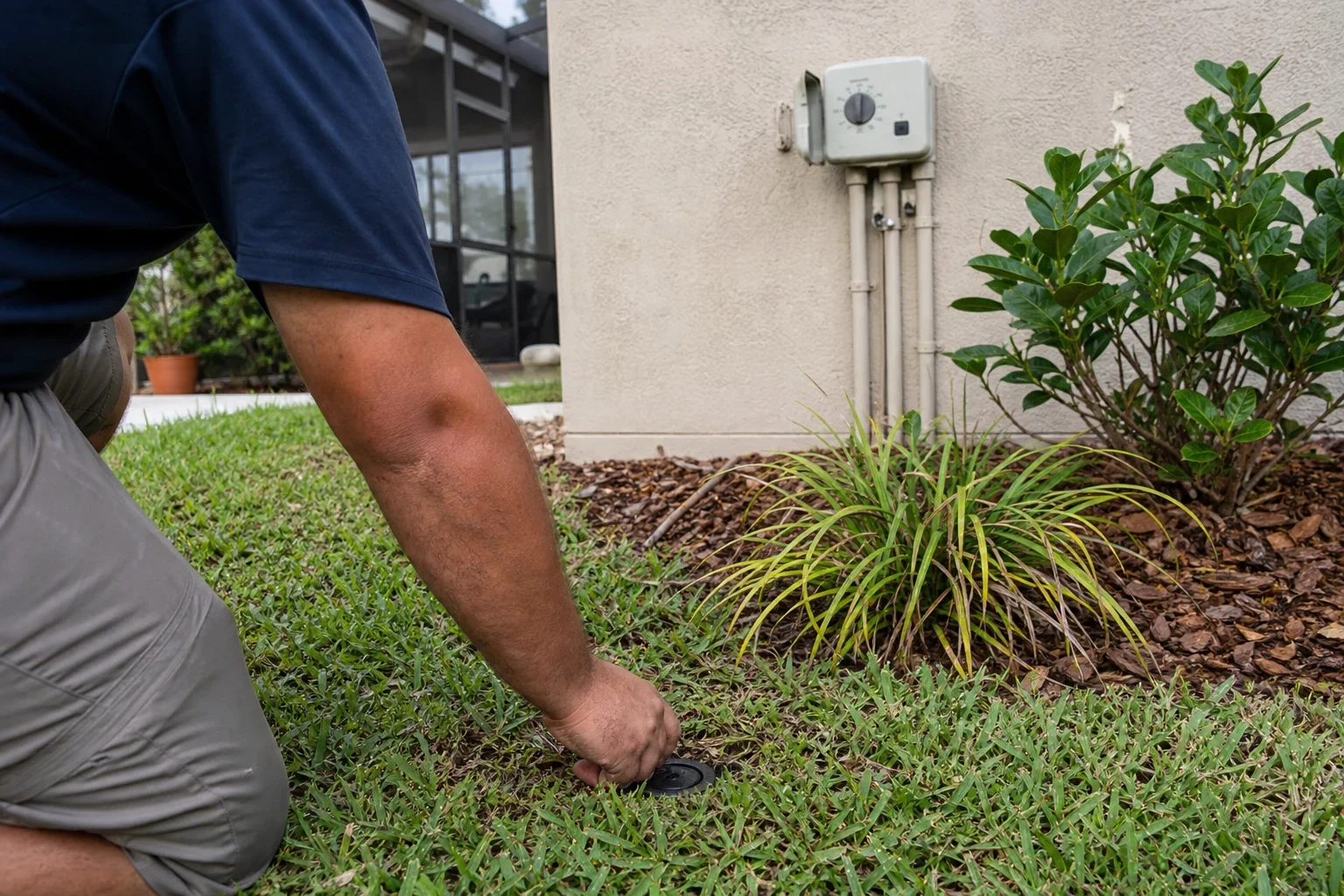
Water where it belongs, and a yard that looks untouched afterward
Irrigation work covers the whole system: the controller in the garage, the valves in their boxes, the PVC lines under the turf and the heads or drip emitters at the surface. We repair what has failed, retune what is wasting water and add zones when a new bed or fresh sod needs its own schedule.
Central Florida's sandy soil drains fast, so a single clogged nozzle or tilted rotor shows up as a brown arc within a week or two of dry spring weather. Getting coverage right matters more here than adding minutes to the timer.
Sprinkler work means digging in a finished yard, and that is where we take the most care. We cut turf in clean strips, keep soil on tarps instead of the grass, and leave the lawn looking the way we found it. We have been in business since 2018, and we are business licensed and fully insured.
What our irrigation service covers
- Head and nozzle repair
- We replace broken spray heads and rotors, clear clogged nozzles and raise sunken heads to grade so mowers stop clipping them. Matched nozzles keep each zone putting down water at an even rate.
- Leak and line repair
- Soggy patches, bubbling soil or a meter that moves with everything off usually point to a cracked line or fitting. We dig only where needed, make the repair with proper couplings and pressure-test before closing the hole.
- Valves and controllers
- We diagnose zones that will not turn on or will not shut off, replace worn solenoids and diaphragms, and set up controllers to follow your local watering days. Florida requires a working rain sensor on automatic systems, and we check or install one as part of the visit.
- New zones and full installs
- New beds, fresh sod and rebuilt landscapes often need their own zones. We plan head spacing for head-to-head coverage and separate turf from shrub beds so each gets the run time it needs.
- Drip irrigation for beds
- Drip lines feed shrubs and perennials at the root and keep spray off windows, stucco and walkways. They work well under fresh mulch, which we can coordinate with our mulch and beds service.
Signs your sprinkler system needs attention
Brown rings or dry strips
Even, healthy turf with a few dead patches usually means a blocked or misaligned head, not a lawn problem. More water on the whole zone rarely fixes it.
Water on the driveway or walls
Heads aimed at pavement waste water and leave staining on stucco and pavers. A few adjustments usually solve it.
Puddles that will not dry
A spot that stays wet days after the system ran points to a leak underground or a valve that is not closing fully.
A higher water bill with no change in habits
Hidden leaks and stuck valves can run for hours. If your bill jumps, it is worth a look before summer heat makes it worse.
A zone that hisses or barely sprays
Weak spray, misting or a hissing valve box often means a pressure problem, a cracked fitting or a failing diaphragm.
What shapes the cost of irrigation work
Most irrigation jobs are priced by what the walkthrough turns up, not by a flat rate. A few loose heads cost far less than a leaking main line under a paver walkway. You see the price in writing before any digging starts. A larger system or full rebuild can be paid for over time, with amounts as high as $100,000, terms anywhere from 2 to 12 years, and no penalty for paying it off early.
Number of zones and heads
More zones mean more valves, wiring and heads to repair or install, and more time testing coverage.
Where the problem is buried
A leak under open turf is quick to reach. One under a driveway, patio or mature bed takes more digging and careful restoration.
Age of the existing system
Older systems with brittle fittings and mismatched heads sometimes cost more to patch repeatedly than to upgrade zone by zone. We will tell you honestly which makes sense.
Drip versus spray
Drip lines for beds use different parts and layout than turf spray zones, and the mix you need affects materials and labor.
Controller and sensor upgrades
Replacing an old timer or adding a rain sensor or smart controller adds parts, but often pays back in lower water use.
How an irrigation visit runs
- 1
Walkthrough and zone test
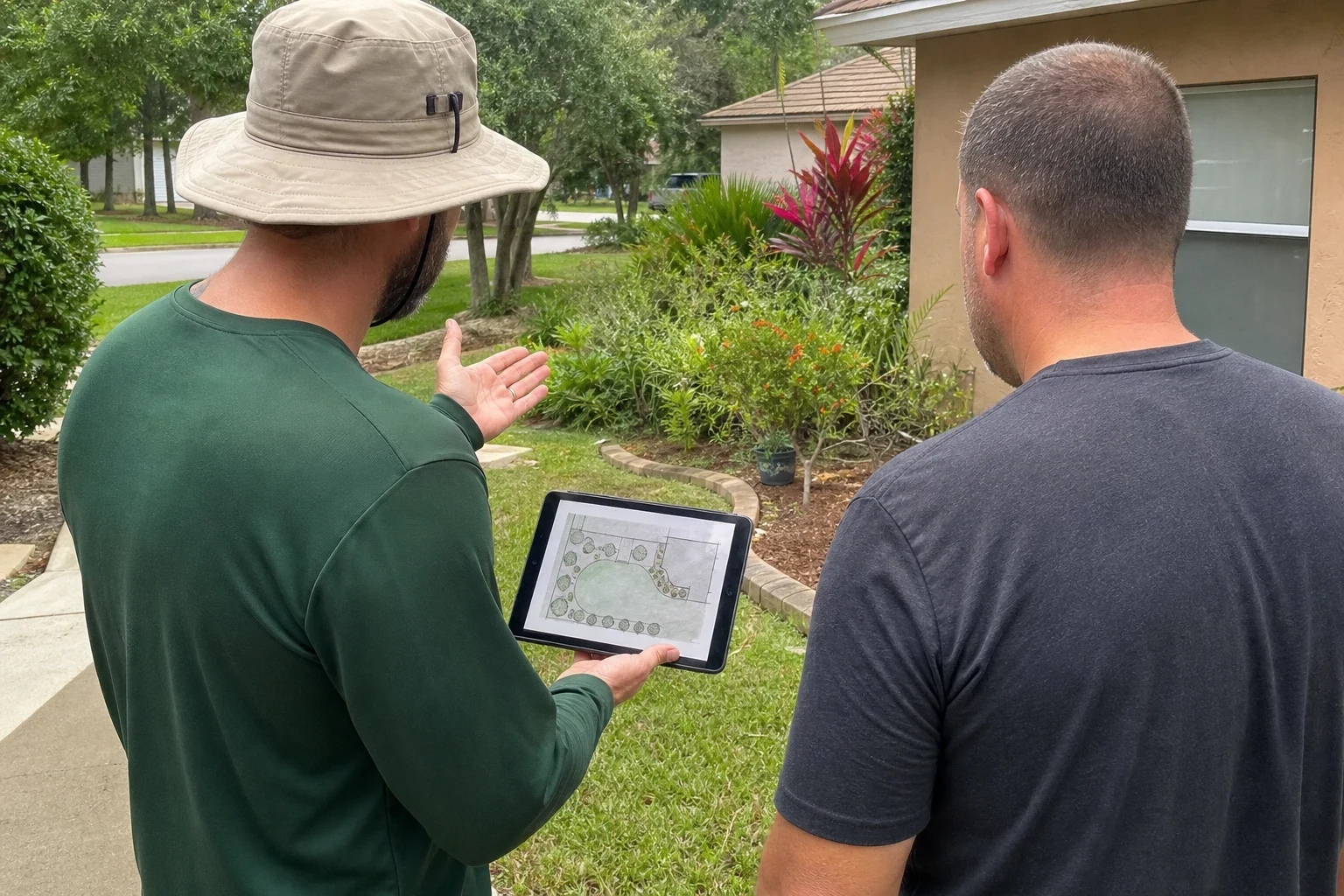
We run each zone with you, flag every head and note dry spots, overspray and leaks. You get a written list of what we found and what we recommend, with photos where it helps.
- 2
Protecting the yard first
Before digging, we lay tarps for soil, mark existing lines and cut sod in neat strips that can go back down. Beds and plantings near the work get covered or moved aside.
- 3
Repair or install
We make repairs, set new lines and heads, then flush the lines before final nozzles go on so debris does not clog them on day one.
- 4
Test, backfill and clean
Every zone runs again to confirm coverage. Then we pack soil back in layers, replace sod, rinse or sweep walks and driveways, and haul off old parts and packaging.
- 5
Controller setup
We program run times by zone and season and show you how to pause the system or run a single zone manually.
Irrigation questions we hear often
Will you tear up my lawn to fix a broken line?
No more than the repair requires. We cut sod in clean strips, keep the soil on tarps and set the turf back when the line is fixed. Within a couple of weeks of normal watering, the patch is hard to find.
How often should my sprinklers run?
It depends on season, sun, grass type and your local watering-day rules. In sandy soil, deeper and less frequent watering builds better roots than short daily cycles. We set the schedule during the visit and adjust it for spring and the summer rainy season.
Do I need a rain sensor?
Florida law requires automatic irrigation systems to have a working device that shuts them off during rain. Many older sensors have failed quietly. We test yours and replace it if needed.
Can you add irrigation to new sod or a new bed?
Yes. New sod needs steady watering for its first few weeks, so we often add or adjust zones alongside our sod installation work. New beds usually do best on drip.
Is the estimate really free?
Yes. The on-site walkthrough and written estimate cost nothing, and you are under no obligation to go ahead.
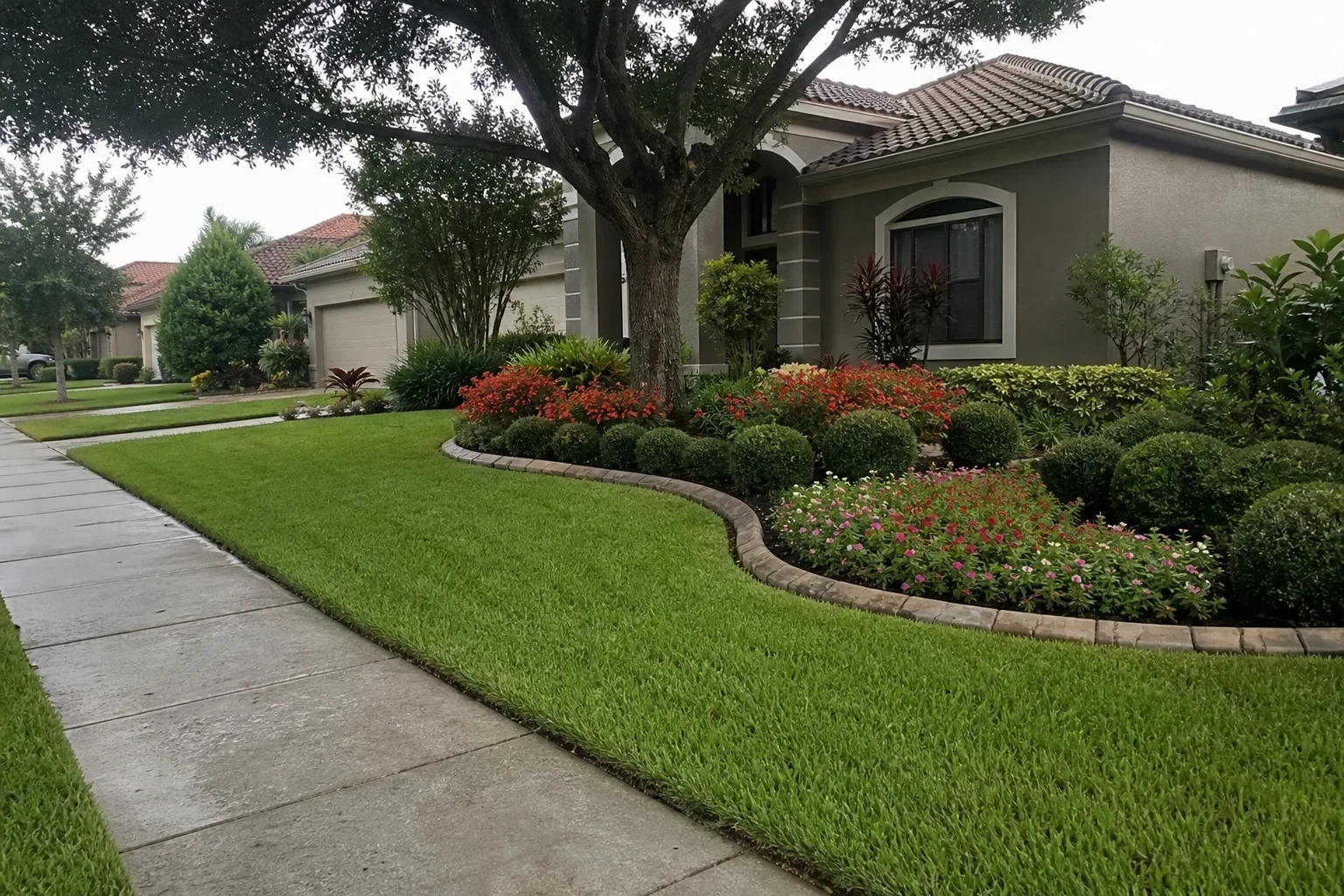
Let us walk your zones with you
We will run the system, show you what is working and what is not, and leave a clear written estimate. If you go ahead, the yard is left tidy each day we are there.