ServicesPalm Tree Pruning and Removal
Palm Tree Pruning and Removal in Leesburg
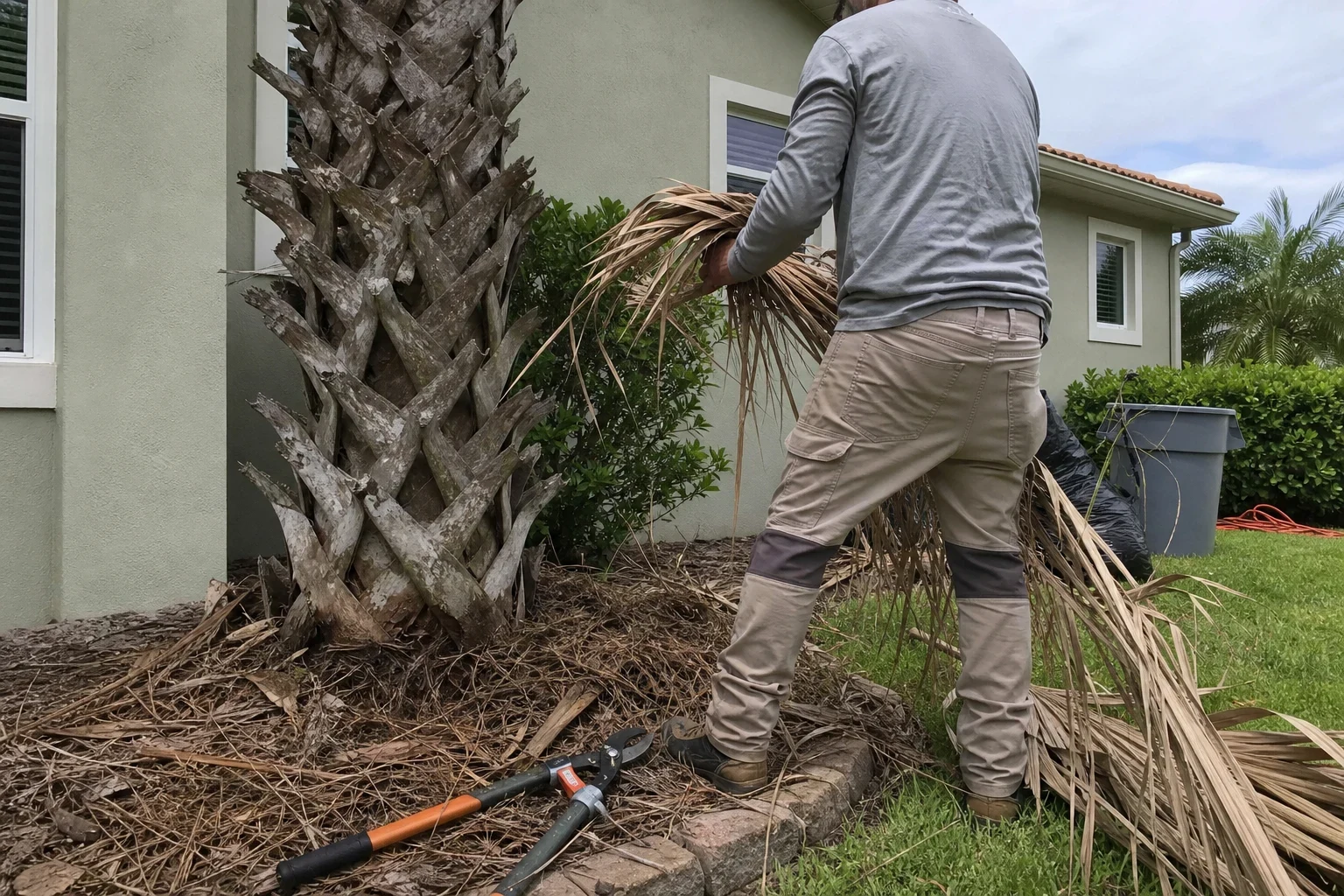
We trim palms the way they grow best. We take dead fronds and seed stalks and leave the healthy green crown in place. When a palm has to come down, we lower it in sections, protect your roof and beds, and leave the yard raked and clear.
Pruning that respects how a palm grows
A palm has a single growing point, the bud at the top of its trunk, and every green frond helps feed it. The old habit of stripping a palm down to a few upright fronds, often called a hurricane cut, starves that bud and can leave a permanently narrowed trunk. We remove fronds that are fully brown or hanging well below horizontal, clear the flower and fruit stalks, and stop there.
Removal is the better call when a palm is dying, leaning toward your home, or crowding a roofline or pool screen. Sabal, queen, Washingtonia and date palms each come down differently, and a tall Washingtonia beside the house needs far more rigging than a pygmy date by the front walk.
We are business licensed and fully insured, and we have been caring for properties in and around Leesburg since 2018. That matters most on the jobs where a trunk is coming down a few feet from your roof.
What the work includes
- Dead fronds and seed stalks
- Fully brown and sagging fronds come off with a clean cut just outside the trunk, and the saw never bites into the trunk itself. We also take the flower and fruit stalks, so queen palm dates are gone before they fall and leave stains on your patio pavers.
- Boot trimming on sabal palms
- The old leaf bases on cabbage palms can stay for a natural look or be trimmed for a smoother trunk. We take only the loose ones so the trunk is not scarred.
- No climbing spikes on palms that stay
- Spike holes never heal in a palm trunk and invite insects and decay. On palms you are keeping, we work from ladders, a lift or rope.
- Sectional removal
- Tall palms come down piece by piece. Each section is lowered on a line rather than dropped near your roof, fence or screen enclosure.
- Ground protection and daily cleanup
- Mats go down where equipment crosses the lawn, and tarps cover planting beds. Every frond, boot and trunk round leaves with us, and we blow off the drive, walks and lanai before we go.
- Stump options
- A palm stump softens faster than a hardwood stump but can still sit for years. Our stump grinding service takes it below grade so you can replant or lay sod.
Signs your palm needs attention
Brown fronds hanging on the trunk
Dead fronds that cling on hold moisture, shelter rats and roaches, and tend to drop during summer storms.
Fruit and seed litter everywhere
Heavy seed clusters stain concrete, clog pool skimmers and sprout seedlings in your beds. Removing the stalks early heads that off.
Fronds rubbing the roof or screen
Fronds that brush shingles or a pool cage wear them down a little with every breeze and can tear screening in high wind.
A narrowing, pencil-point crown
Smaller new fronds and a trunk that tapers at the top often point to nutrient trouble or decline. We will tell you honestly whether feeding could help or the palm is past saving.
Shelf fungus at the base
Hard, shelf-like growths near the soil line usually mean Ganoderma butt rot. It has no cure and weakens the trunk from inside, so that palm should come down before it fails on its own.
What affects the price
We price every palm after we have seen it, and the cost depends more on reach and what lies beneath than on species alone. Every item goes on a written estimate before work begins. If you would rather spread out the cost of a bigger project, we can arrange financing of as much as $100,000, repaid over anywhere from two to twelve years, and paying it off early carries no penalty.
Height and species
A short sabal trimmed from a ladder is a quick job. A Washingtonia that needs a lift or rope work takes more time and gear.
Access and what sits below
Palms over a roof, pool cage, fence or delicate plantings need more protection and rigging than one standing alone in open lawn.
How many palms, and how often
Several palms trimmed on the same visit cost less per tree, and palms kept on a regular schedule are faster to maintain than neglected ones.
Removal, haul-off and stump
Taking a palm down, hauling the trunk and grinding the stump are each priced separately, so you can choose what you need.
How a palm job runs
- 1
A walkthrough at your home
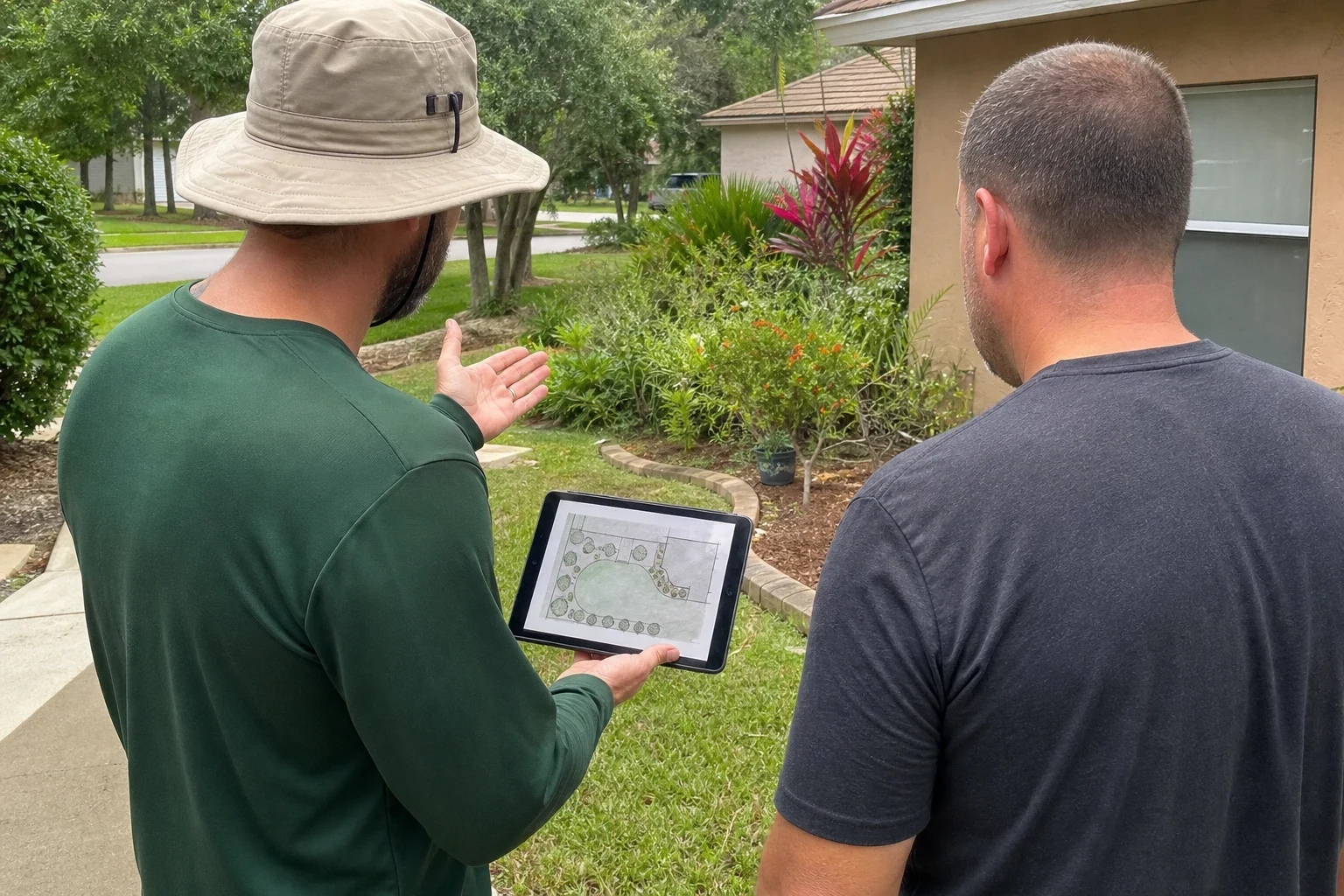
We look at each palm, its species, height and what sits beneath it, and how we will reach it. You hear plainly which palms need a trim, which need removal, and which are fine as they are. The walkthrough is free.
- 2
A written estimate
Each palm is listed on its own line, with haul-off and any stump grinding shown separately. If your city or HOA asks for approval before a removal, we point that out up front.
- 3
Setting up the site
On the day, we lay mats and tarps, mark off the work area and ask you to move cars and patio furniture clear of the drop zone.
- 4
Pruning or removal
Cuts are made cleanly at the trunk, and removals come down in controlled sections. Debris is gathered as we go rather than left in piles.
- 5
Cleanup and a final look
We rake the beds, blow off hard surfaces and haul everything away. Then we walk the yard with you so you can see the finished result.
Palm questions we hear most
How often should my palms be trimmed?
Most palms do well with one visit a year. Queen palms that fruit heavily may want two. Many homeowners schedule a trim before the summer storm season, which works well as long as the healthy green fronds stay on.
Will you give my palm a hurricane cut?
We will not strip a palm down to a few upright fronds. It removes the leaves feeding the tree and does little to help it in wind. A palm with a full, healthy crown generally holds up better in a storm.
Can a sick palm be saved?
Sometimes. Frizzled or yellowing fronds from nutrient shortages can improve over many months with the right palm fertilizer. Ganoderma butt rot and lethal bronzing cannot be cured, and we will tell you if that is what we see.
Do I need permission to remove a palm?
It depends on your city and any HOA rules. We will flag what is likely to apply during the walkthrough so you can sort out approval before we schedule the removal.
What will be left in my yard when you finish?
Nothing but the stump, if you decide to keep it. Fronds, seed stalks and trunk sections leave with us, and we clean the drive and walks before we go.
Let us take a look at your palms
We will walk the yard with you, look at each palm and give you a written estimate you can review at your own pace.