ServicesTree Trimming and Removal
Tree Trimming and Removal in Leesburg
We prune and take down trees around your home using ropes, ground protection and a crew that rakes, blows and hauls before leaving each day. You get a safer canopy, a clear roofline and a yard that looks cared for, not worked over.
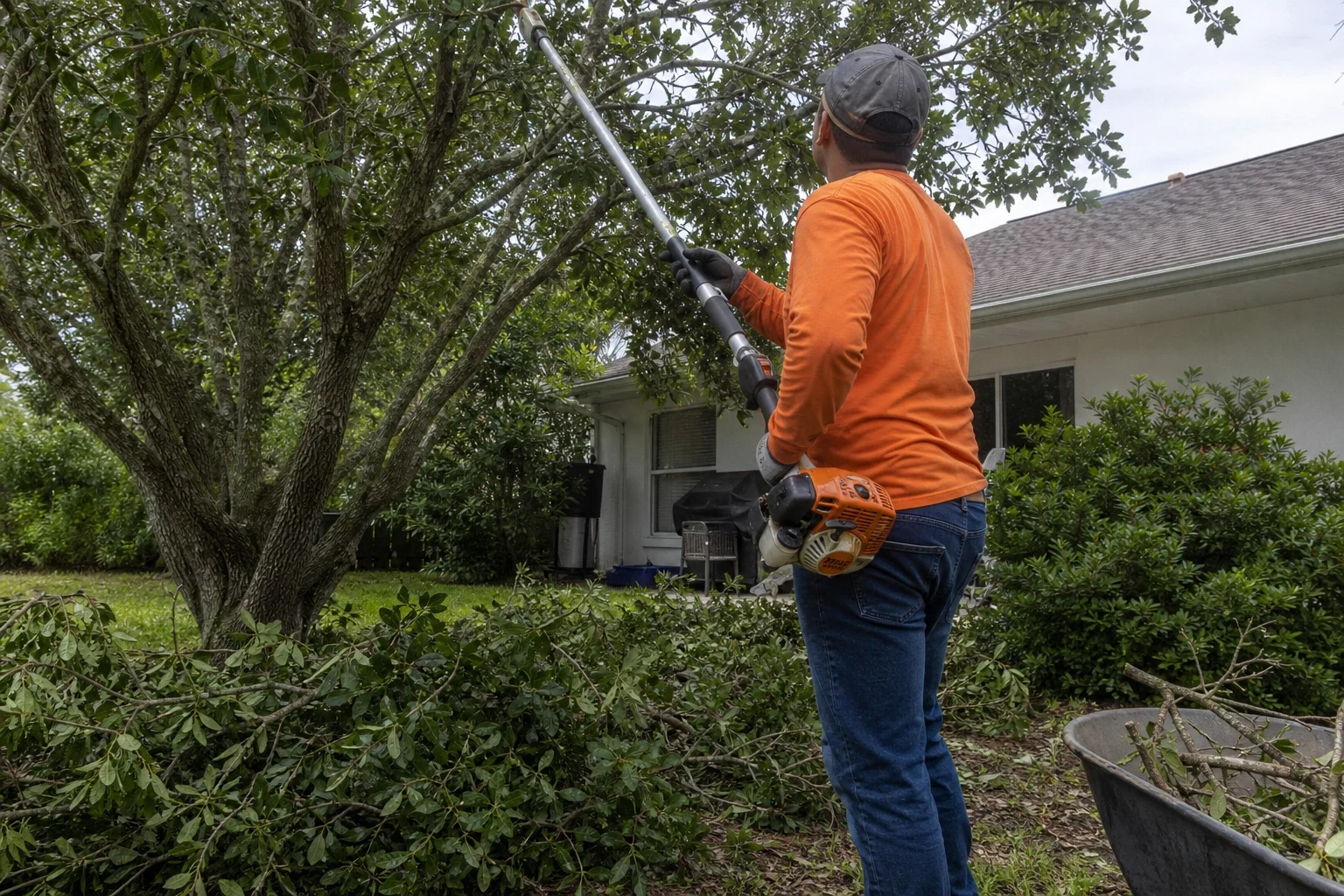
Careful work above your roof and lawn
Most of the trees we work on are oaks. Live oaks can stand for generations, while laurel and water oaks grow fast and start shedding limbs as they age. Good trimming removes dead wood, lifts low limbs off the roof and driveway, and thins the crown so summer storms pass through it instead of pushing against it. We cut back to the branch collar so the tree can seal the wound, and we do not top trees or strip out their interiors.
Removal is the right call when a tree is dead, hollow, leaning toward the house or simply growing in the wrong place. We lower heavy wood in sections on ropes rather than dropping it, which keeps it off your roof, fence, irrigation heads and turf. We have been in business since 2018, and this careful, piece-by-piece approach is how we have always handled trees near homes.
Palms grow differently and need different cuts, so those are handled under our palm tree pruning and removal service.
What the work includes
- Deadwood and crown cleaning
- We take out dead, broken and crossing limbs, along with weak sprouts that crowd the crown. Heavy clumps of Spanish moss come out with the deadwood, while the tree keeps its natural shape.
- Clearance from the house
- Limbs are cut back from the roof, siding and screen enclosures. Branches resting on shingles hold moisture and drop debris, so clearance matters even on a healthy tree. Limbs touching the main power lines on the pole belong to the utility, and we will tell you when that applies.
- Sectional removal with rigging
- Large trees come down in measured pieces, each one tied off and lowered to the ground crew. Nothing is left to fall freely near your home.
- Protection for the yard
- Before the first cut, we lay ground mats where equipment travels, cover beds with tarps and flag irrigation heads so they are not crushed.
- Daily cleanup and haul-off
- Brush is chipped as we go, not piled for days. At the end of each day we rake the lawn, blow off driveways, walks and pool decks, and haul the debris away.
Signs a tree needs attention
Bare limbs in spring
A branch that stays leafless after the rest of the tree has filled in is usually dead. Dead oak limbs get brittle quickly and tend to drop in the next strong wind.
Mushrooms or soft wood at the base
Fungus growing from the root flare or soft, crumbly wood at ground level points to decay inside the trunk. It deserves a close look before storm season.
Branches on the roof
Limbs rubbing shingles or hanging over the screen enclosure will cause damage over time, even if the tree itself is sound.
A new lean or lifting soil
A tree that has started to lean, or soil that is cracking and heaving on one side, may be losing its root hold.
Large limbs falling in ordinary weather
If a tree keeps dropping big limbs after routine afternoon storms, the wood is likely weakening. Laurel oaks are especially prone to this as they age.
How a tree job runs
- 1
Walkthrough and written estimate
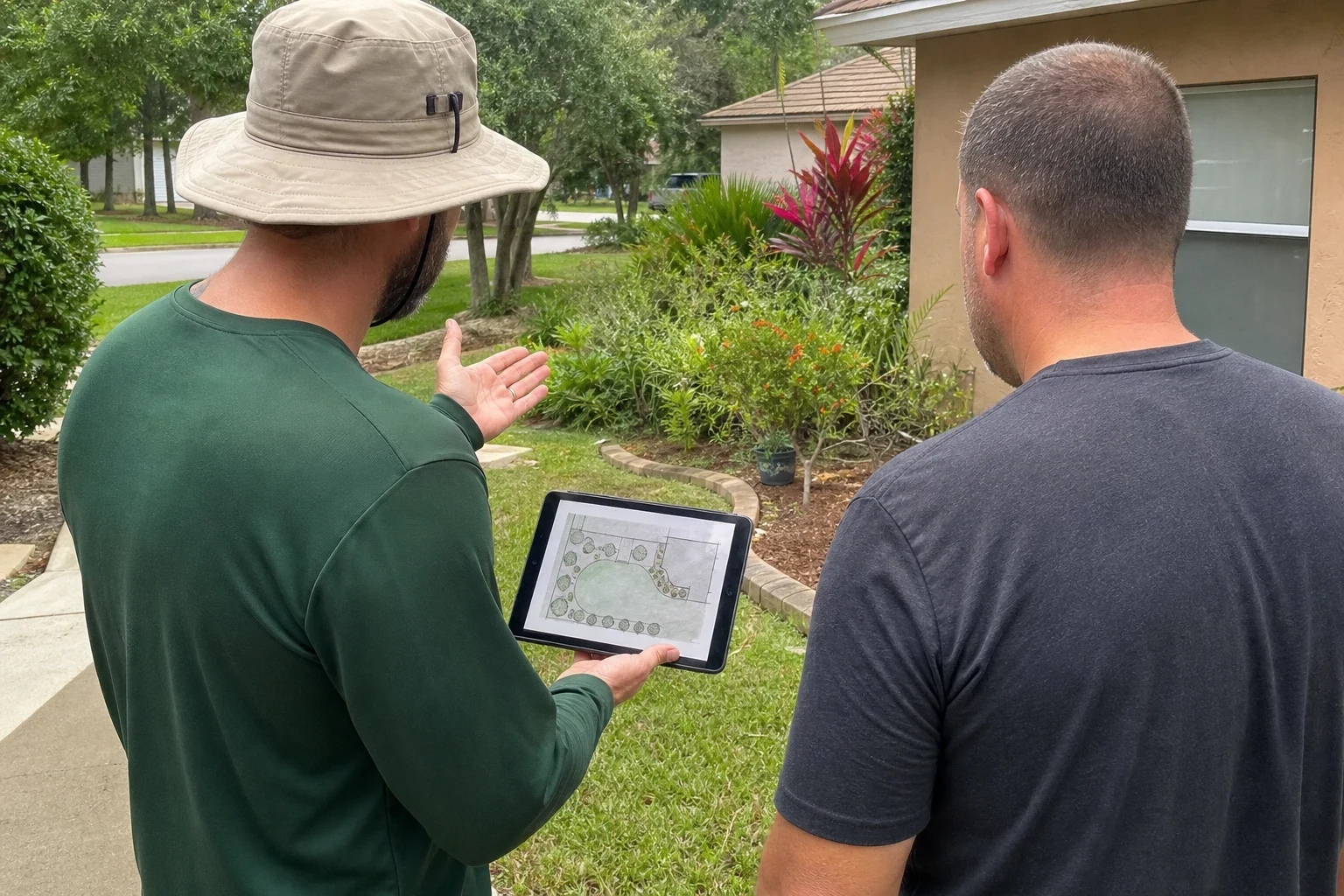
We walk the property with you and look at each tree. You get an honest view of what should be trimmed, what should come down and what can safely wait, followed by a written estimate that lists every tree. If a permit is needed, we tell you before anything is scheduled.
- 2
Setting up the site
On the day, we lay mats, tarp the beds, flag sprinkler heads and confirm where the truck and chipper will park so your driveway stays usable.
- 3
Cutting and lowering
A climber or lift works the canopy while the ground crew lowers and chips each section. Keeping up with the brush means the yard never turns into a debris field.
- 4
Cleanup every day
We rake, blow and haul before leaving, even on jobs that run more than one day, so you can use your yard each evening.
- 5
Final walk together
Before we pack up, we walk the property with you, check the lawn and beds, and fix any marks we left.
What affects the price
We price tree work after seeing the trees, because two oaks of the same height can be very different jobs. Your estimate lists each tree and the work planned for it, so you can decide what to do now and what can wait. When a bigger project is easier to spread out over time, we offer financing of up to $100,000, with terms anywhere from 2 to 12 years and no penalty if you pay it off early.
- Size and spread
- Taller trees with wide crowns take more cuts, more rigging and more time to chip.
- Access to the tree
- A tree behind a fence or pool cage, where the truck cannot reach, means carrying brush out by hand.
- What sits underneath
- A roof, screen enclosure or power drop under the canopy calls for more rigging and slower, more controlled lowering.
- Condition of the wood
- Decayed or hollow trees may not be safe to climb, so they can require a lift or a different removal plan.
- Wood, stump and haul-off
- Keeping firewood on site lowers hauling. Stump grinding is a separate service that we can quote alongside the removal.
Tree trimming questions
Something not covered here? (407) 594-7966
When is the best time to trim my oaks?
Late winter through spring is a good window. It gets weak limbs out before hurricane season begins in June. Live oaks tolerate light pruning most of the year, but we avoid heavy cuts during the hottest stretch of summer.
Do I need a permit to remove a tree?
It depends on where your home sits and on the size and species of the tree, and rules can differ between city limits and county land. We check before scheduling and tell you plainly whether a permit is needed.
Will your equipment tear up my lawn?
We lay ground mats wherever equipment and heavy wood travel, which spreads the weight. Grass under the mats may look flattened for a few days, then recovers. If we leave a rut or mark, we rake and level it before we go.
Can you save a tree instead of removing it?
Often, yes. Removing deadwood and reducing weight on long limbs can give a sound tree many more years. If a trunk is hollow or the roots are failing, we will say so and explain why removal is the safer choice.
Is your company properly covered for work above my house?
Yes. We are business licensed and fully insured, which matters when a crew is working at height over your roof and screen enclosure. We are happy to talk through how we rig each limb during the walkthrough.
What happens to the stump and wood?
We cut the stump low and haul the wood away unless you would like logs left for firewood. If you want the stump gone, we can add stump grinding to the same visit.
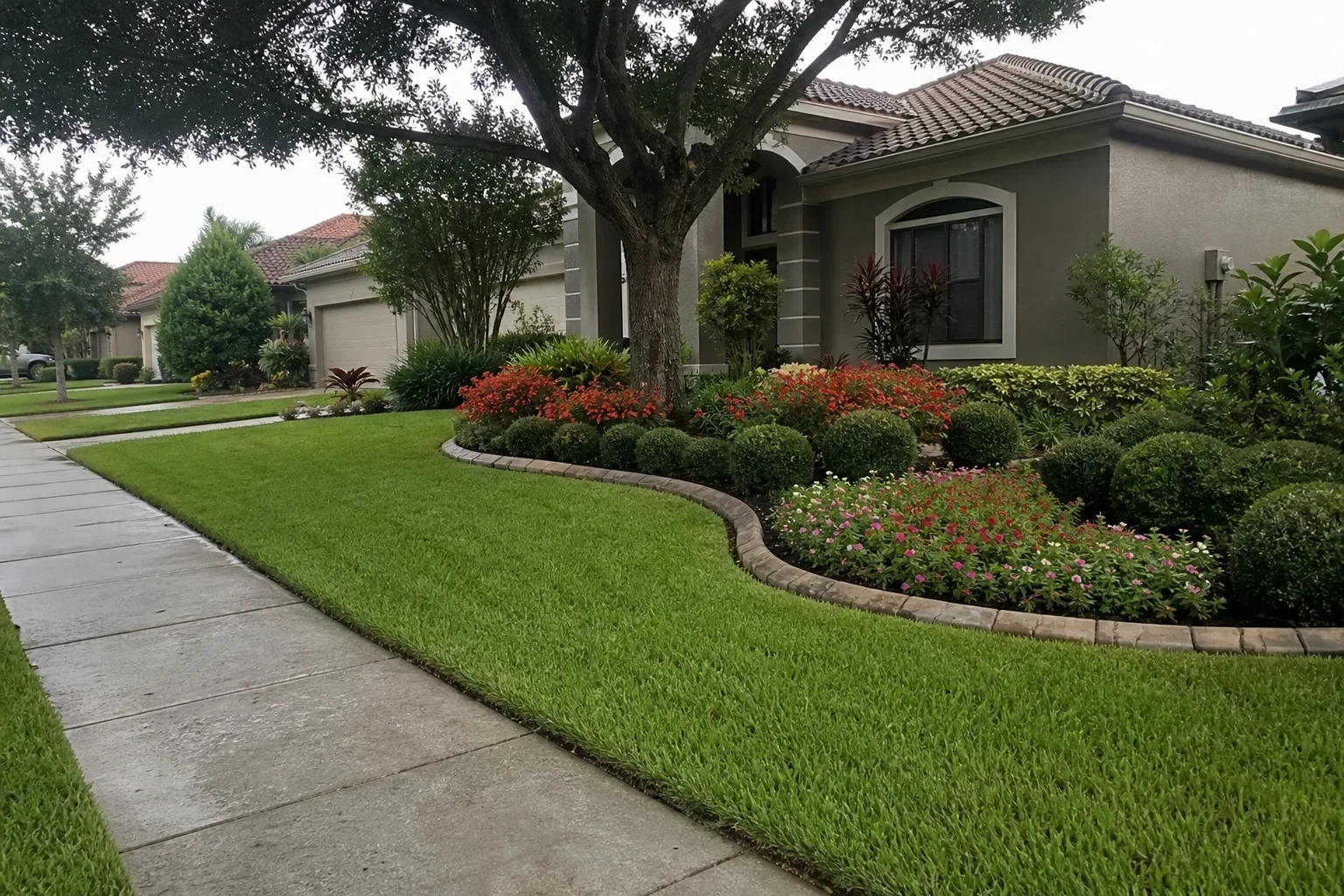
Let's walk your trees together
We will look at each tree with you, explain what it needs and what can wait, and follow up with a free estimate. There is no pressure to do everything at once.