ServicesMulch and Beds
Mulch and Bed Service in Leesburg
We pull the weeds, cut sharp edges and lay fresh mulch at a depth that holds moisture and keeps weeds down. Tarps go down before any material moves, and walks, drives and siding are blown clean before we pack up, so your home looks finished that same afternoon.
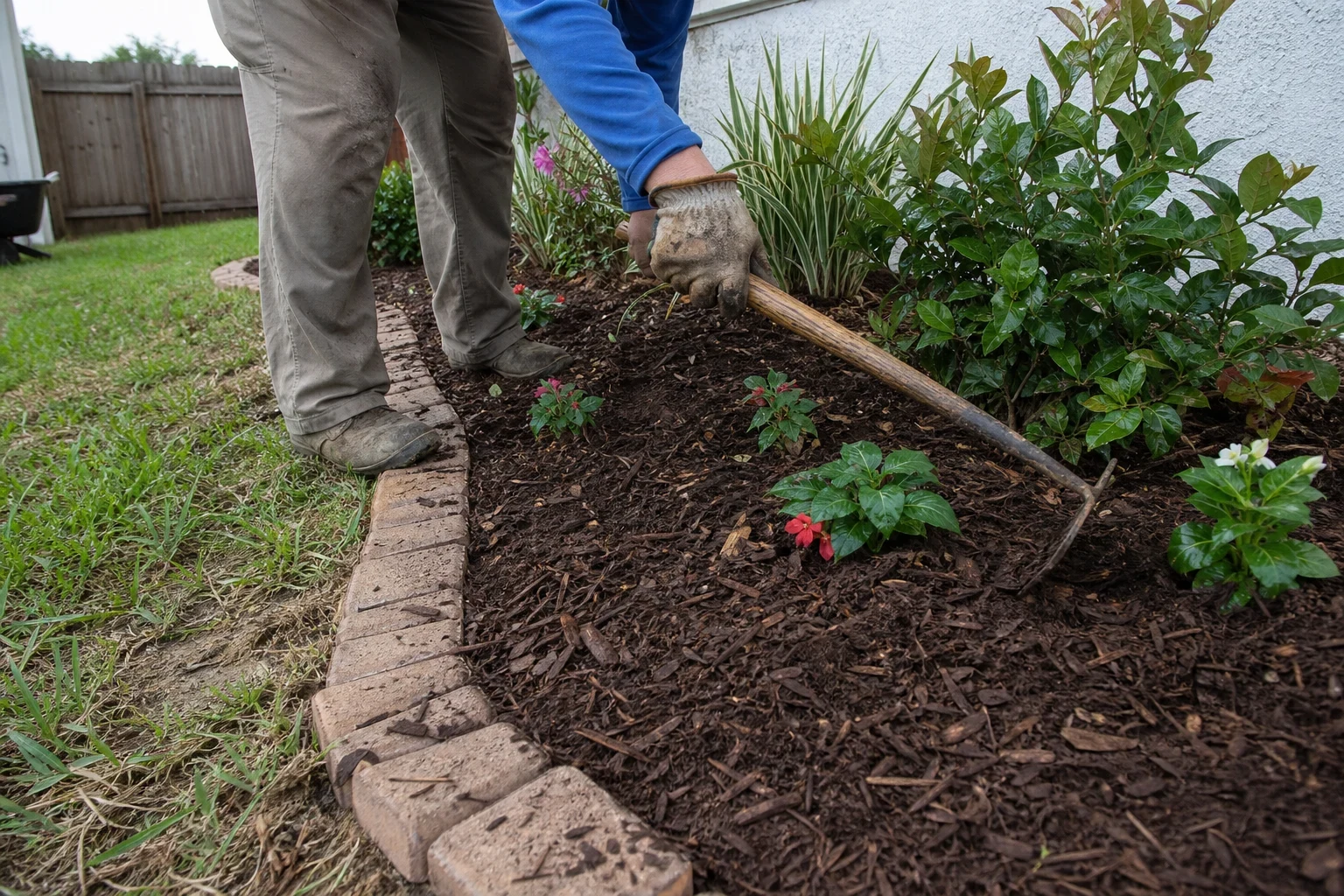
Beds that look settled, not just covered
Good bed work starts underneath the mulch. We clear out weeds by the root, remove old mulch that has broken down into fine, crusted material, and reshape the bed edge so the new layer has a crisp line to sit against. Then we spread an even layer, usually two to three inches, and keep it pulled back from your foundation, siding and tree trunks.
Sandy soil and heavy summer storms are hard on beds. Light bark washes onto sidewalks, thin layers bake out by July, and mulch piled against a slab invites moisture and pests toward the house. We choose the material and depth with that in mind, so the bed holds its shape through the rainy season.
Landscaping Leesburg has been in business since 2018. We are business licensed and fully insured, which matters when a crew is working with wheelbarrows and blowers a few feet from your windows and doors.
What a mulch and bed visit includes
- Weeding by the root
- We hand-pull weeds and grass runners rather than burying them. Anything left under fresh mulch is back through it within weeks.
- Old mulch removal or top-up
- If the existing layer is thin but healthy, we top it up. If it has packed into a water-shedding crust or built up too deep, we haul the excess away first.
- Crisp bed edges
- We recut the line between lawn and bed with a sharp spade edge, so turf stays out and mulch stays in. Curves are kept smooth and consistent.
- Your choice of material
- Pine bark, pine straw, cypress, eucalyptus or stone, each with its own look and lifespan. We walk you through how each behaves in sun, shade and on slopes before you decide.
- Spacing around plants and the house
- Mulch stays a few inches off stems, trunks and your foundation. No volcano piles around trees and no material against siding or weep screeds.
- Site left tidy
- We sweep and blow every walk, driveway and patio, and pick up stray mulch from the lawn. Empty bags and debris leave with us.
Signs your beds are due for attention
You can see bare soil
Thin or patchy mulch lets soil dry fast and gives weed seed a place to land. If dirt shows through, the layer has done its job and needs renewing.
Mulch has turned gray and crusty
Old mulch can mat into a layer that sheds water instead of letting it soak in. Plants underneath stay thirsty even when the sprinklers run.
Weeds keep coming back
Regular sprouting usually means the layer is too thin or weeds were buried rather than pulled.
Edges have disappeared
When grass creeps into the bed and the line goes soft, the whole front of your home looks less kept, even if the plants are healthy.
Mulch washes onto the walk
Material ending up on the driveway after every storm points to the wrong product for the slope or an edge that needs rebuilding.
How the work goes on the day
- 1
Walkthrough and plan
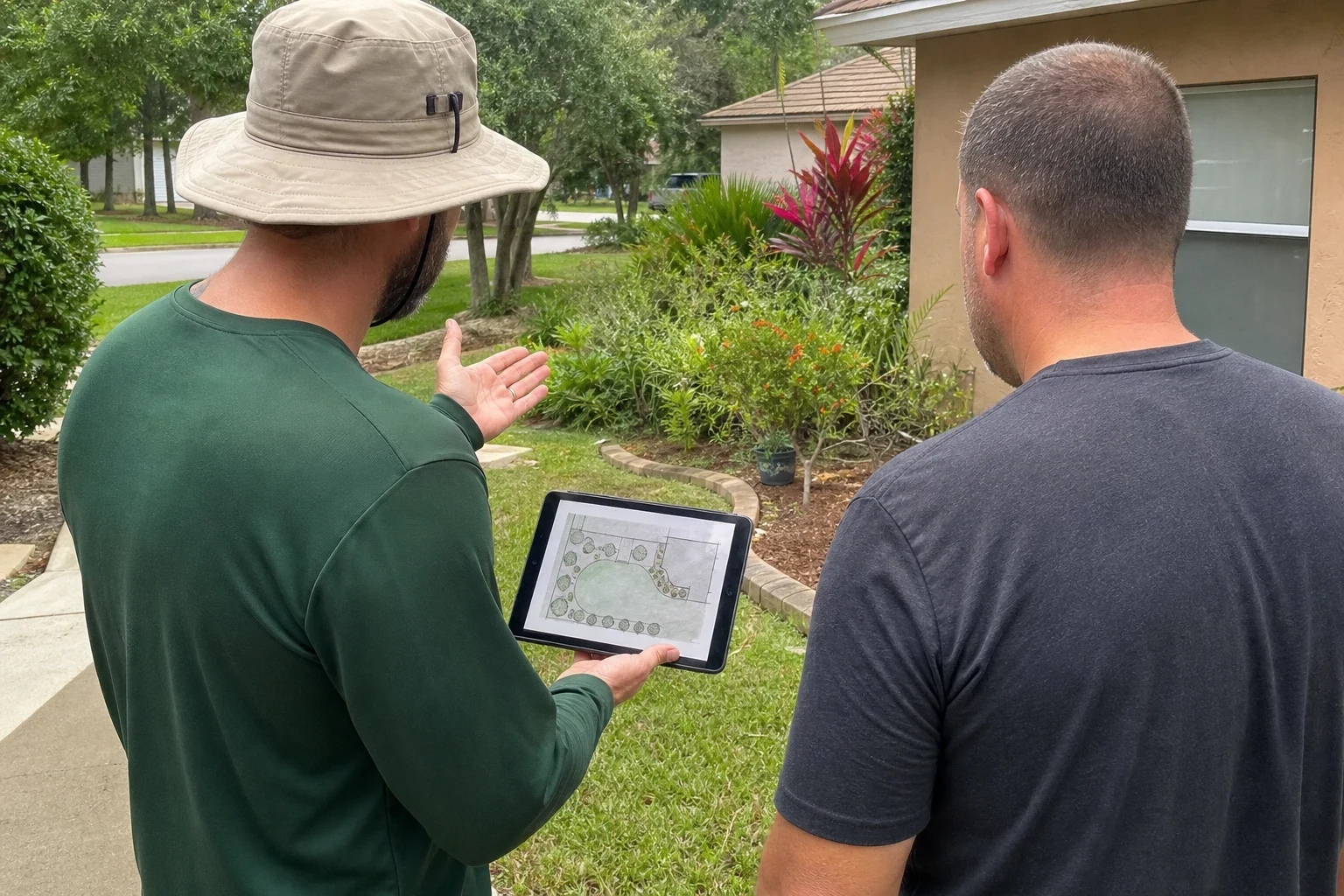
We start with a free on-site walkthrough of your beds. We note what needs removing, suggest a material and confirm which areas to protect, then give you a clear estimate.
- 2
Protect before we start
Tarps go down on walks and drives where material will be staged. We set wheelbarrow paths that avoid soft lawn and keep loads clear of doors, windows and vehicles.
- 3
Prep the beds
Weeds come out, old mulch is thinned or hauled away, and edges are recut. If drip lines or sprinkler heads sit in the bed, we mark them so nothing gets buried or knocked loose.
- 4
Spread, detail and tidy up
Fresh mulch goes down evenly and is pulled back from stems and the house. We finish by blowing off every hard surface and walking the property with you if you are home.
What moves the price of mulch and bed work
Every estimate is written for your beds after we have seen them, so there is no guessing. The biggest variables are how much ground there is to cover and how much prep it needs before new material goes down.
- Bed size and depth
- Square footage and the depth you want set how much material we bring. Topping up a healthy layer takes far less than starting from bare soil.
- Condition underneath
- Heavy weeds, matted old mulch or buried fabric add labor and haul-away. Well-kept beds go faster.
- Material choice
- Pine straw, bark, hardwood-style mulches and stone vary in cost and in how often they need renewing. Stone costs more up front but lasts much longer.
- Access
- Beds behind fences, along narrow side yards or up slopes mean more trips by hand. Open front beds near the driveway are quicker to load.
Mulch and bed questions
Something not covered here? (407) 594-7966
How often should my beds be re-mulched?
Most organic mulches here need a top-up about once a year, and pine straw often more often because it breaks down quickly in our heat. Stone rarely needs replacing, just an occasional raking to clear leaves. At the walkthrough we can tell you how your current layer is holding up.
Will mulch attract termites to my home?
Mulch does not draw termites by itself, but material piled against the foundation keeps the area damp and hides activity. We keep a clear gap between the mulch and your slab and siding so that zone stays dry and visible.
Do you put down landscape fabric?
We can, though we only recommend it in some spots, such as under stone. Under organic mulch, fabric tends to collect a layer of soil on top that weeds root into anyway. We will explain the tradeoff for your beds.
What happens to the old mulch and weeds?
We bag or load it and take it with us. Nothing is left in piles at the curb or behind the shed unless you ask us to leave it for your own compost.
Can you add new plants while you are doing the beds?
Yes, simple additions fit well into a bed refresh. If you are thinking about reshaping beds or changing the planting entirely, our landscape design service is the better place to start, and the mulch goes down last.
Ready for beds that look cared for
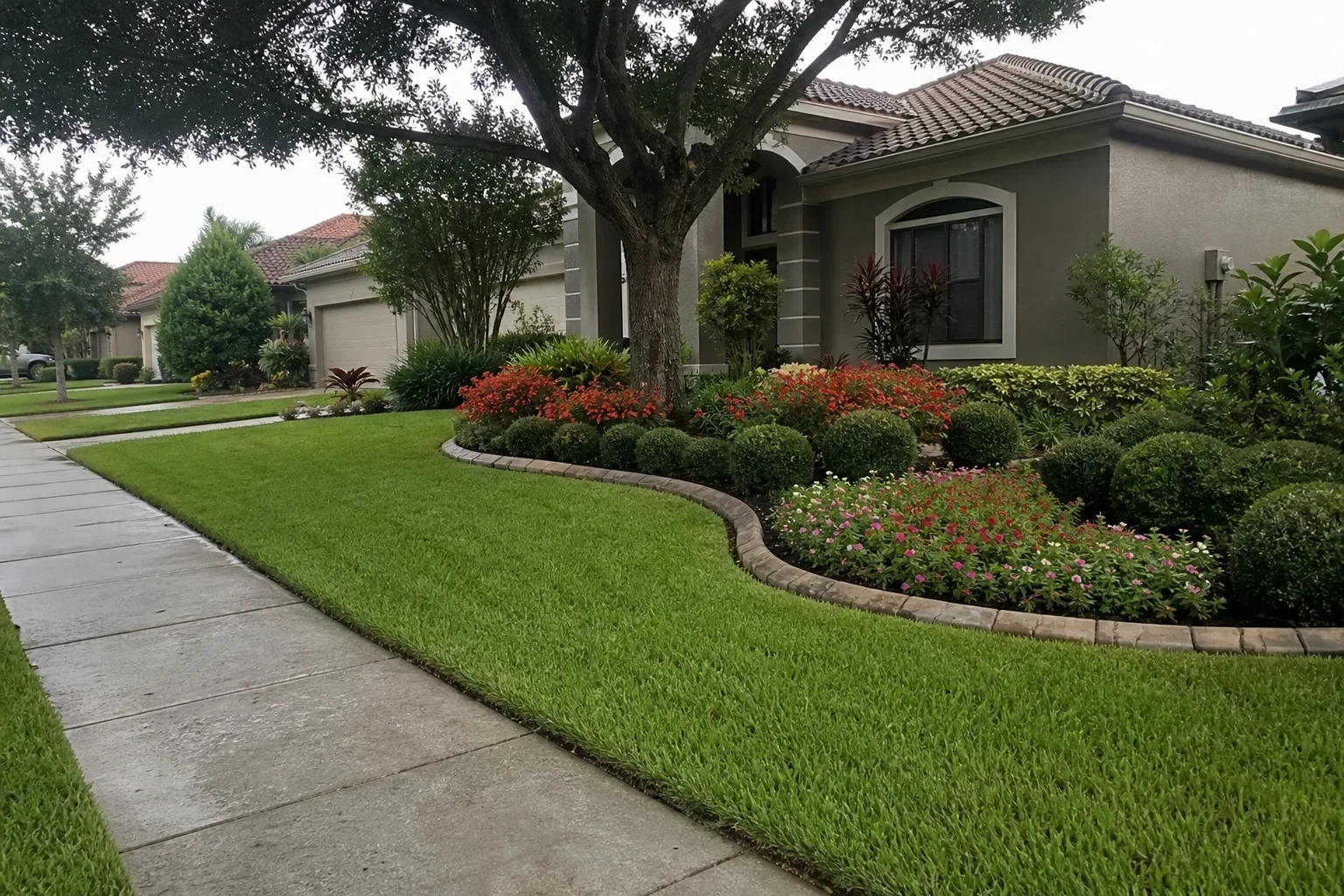
We will look at your beds, talk through materials and leave you a clear estimate. The estimate costs nothing.