What Is Corrugation Irrigation and How Does It Work in a Leesburg Yard?
A farm-field watering method that helps explain how water moves through soil, and why most home landscapes are better served by something else.
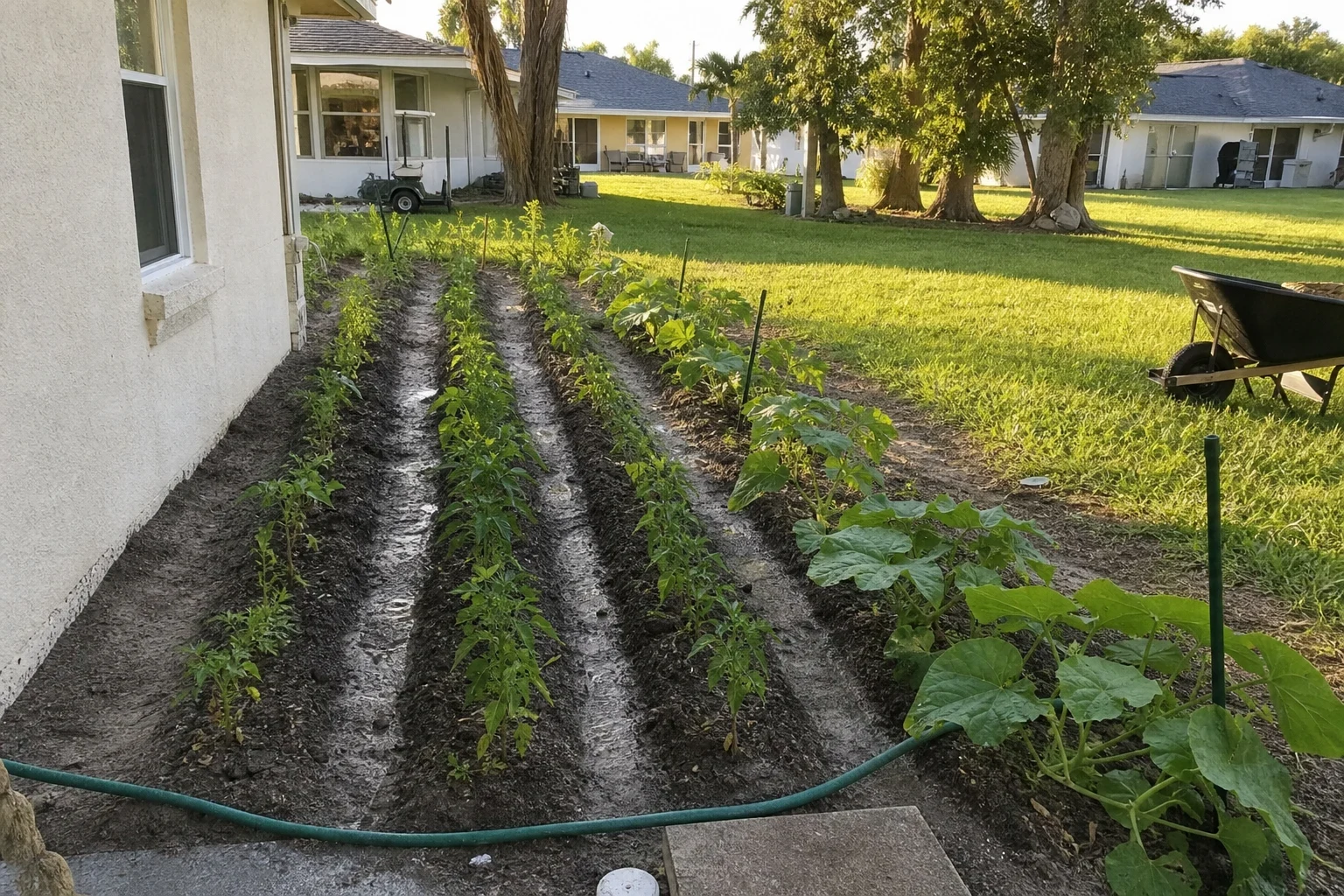
What is corrugation irrigation and how does it work?
Corrugation irrigation is a surface watering method that sends water down a gentle slope through small, shallow channels cut side by side into the soil. Gravity carries water along each channel while it soaks sideways and downward into the ground between them. It works best on even slopes with soil that takes up water slowly.
How does corrugation irrigation actually work?
The ground is shaped into a series of small, closely spaced grooves, usually running straight down the gentlest slope of the area. These corrugations are much shallower than the deep furrows used for row crops, so the crop grows across the whole surface rather than on raised ridges.
Water is released at the high end from a supply ditch, a gated pipe or siphon tubes, one stream per groove. As it travels downhill, it seeps out the sides of each channel and down into the root zone. The water is shut off once the far end has had enough time to soak, and the operator judges that timing by soil type, slope and how fast the stream is moving.
The whole system depends on balance. If water sinks in too fast, the top of the field gets soaked and the bottom stays dry. If it runs too fast, it carries soil away and pools at the low end.
How is it different from furrow and flood irrigation?
All three are surface methods that use gravity instead of pressure. The differences come down to how the water is spread and what is growing.
- Flood irrigation covers an entire leveled area with a sheet of water held in by low borders.
- Furrow irrigation uses deeper trenches between raised rows, common for vegetables and row crops.
- Corrugation irrigation uses many shallow grooves for close-growing plants such as grains, hay or pasture grass.
- None of them need pumps or emitters at the plant, which is why they were long favored on open farmland.
Does corrugation irrigation work for a home in Leesburg?
In most cases, no. Much of the soil around Leesburg is sandy and drains quickly, so water poured into a groove tends to sink near where it starts instead of traveling the length of the yard. You end up overwatering one strip and leaving the rest thirsty, which wastes water and invites fungus and weeds where it collects.
Residential lots also bring practical problems. Lawns of St. Augustine or Bahia grass do not tolerate being cut into grooves, mowers ride poorly over corrugated ground, and runoff can carry soil toward walkways, driveways and the foundation of your home. Florida summers add heavy afternoon rain that can wash shallow channels out entirely.
Regional watering-day rules also favor systems that apply a measured amount of water in a set window, which is hard to do with open channels.
What waters lawns and beds better?
Pressurized systems put water exactly where plants need it and let you control how much. For most homes we design a mix of zones, each matched to what grows there and how much sun it gets.
Florida requires automatic systems to have a working rain shutoff device, and we include one on every controller we set up so the sprinklers skip a cycle after a good storm.
- Rotor heads for larger open turf areas, where slower, even coverage helps sandy soil absorb water.
- Spray heads for smaller lawn sections and narrow strips near hardscape.
- Drip line or point emitters under mulch in planting beds, so leaves stay dry and water goes straight to the roots.
- A smart controller that adjusts run times through the seasons instead of watering the same in January as in July.
Is there any place for the idea in a home garden?
The principle still helps in a vegetable patch. Shallow grooves between raised rows let you water the roots with a hose and keep foliage dry, which cuts down on leaf disease in humid weather. Amending sandy beds with compost slows drainage enough for this to work on a small scale.
When we install a full system, we treat the yard as part of your home. Trenches are cut narrow, sod is lifted and set back in place, soil stays off the driveway and patio, and we clean up at the end of each work day so you are never living in a construction zone.
More questions about corrugation irrigation
Something not covered here? (407) 594-7966
Is corrugation irrigation the same as using corrugated pipe?
No. Corrugated pipe is ribbed plastic tubing often used for drainage, such as carrying downspout water away from a house. Corrugation irrigation refers to grooves shaped into the soil surface, not to any pipe.
Will installing a sprinkler or drip system tear up my yard?
Some digging is unavoidable, but it can be kept tidy. We cut narrow trenches, set lifted sod back in place, and clear soil and debris each day so the property looks finished when we leave.
Can an older system be updated rather than replaced?
Often it can. Replacing worn heads, adding drip zones to beds and fitting a newer controller can fix uneven coverage without redoing every line, and we will tell you plainly which option makes sense after seeing it.
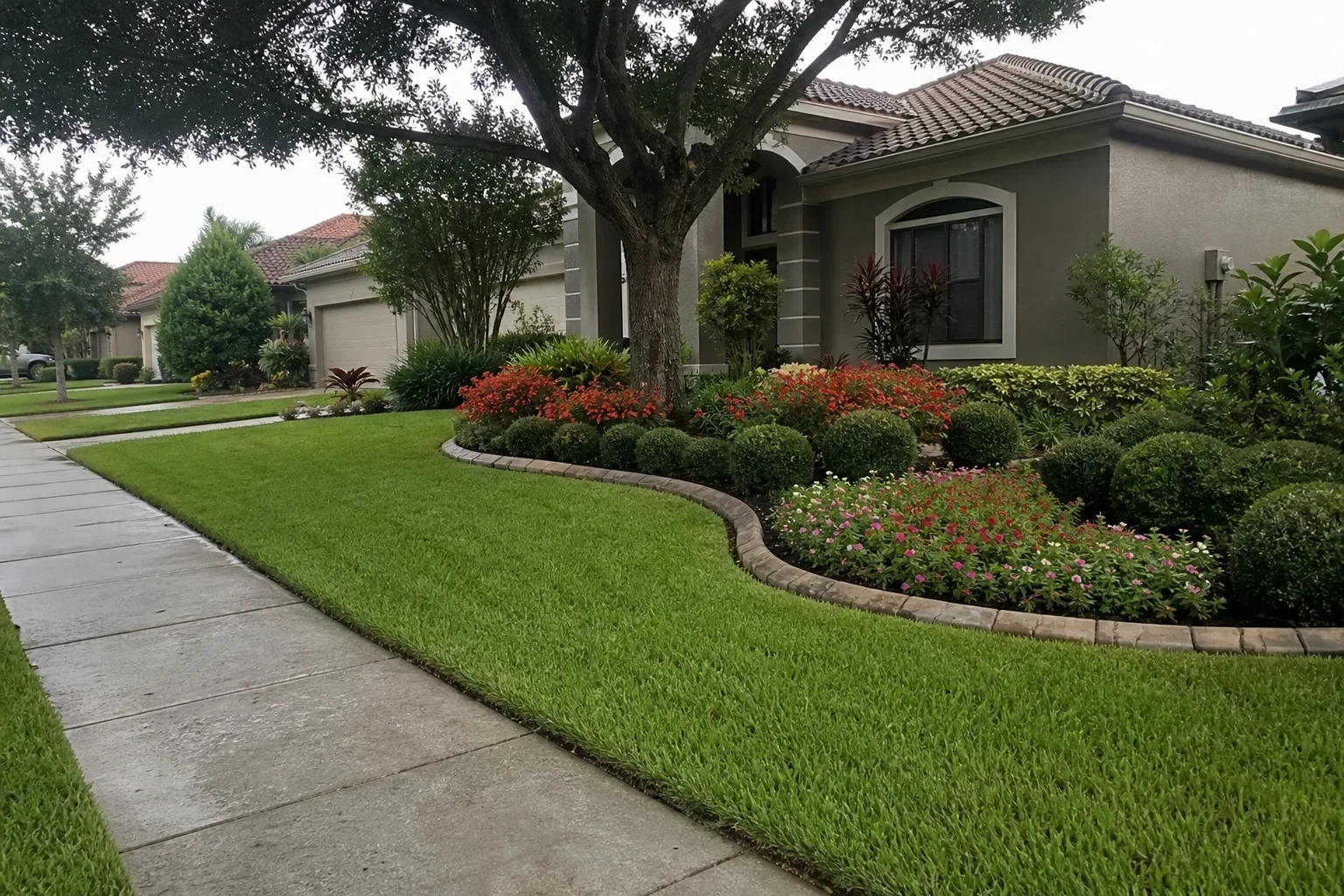
Let us look at how your yard takes water
We will walk your property with you, check soil, slope and coverage, and explain which irrigation setup fits your lawn and beds. The walkthrough is free, and you get a clear estimate before any work is scheduled.